




What AWG cable is suitable for a LiFePO4 12V 100Ah battery
Lithium battery 12 V, DC up to 50 A:
AWG 6 → suitable, with a margin
diameter ≈ 4.1 mm
cross-section ≈ 16 mm²
If the cable length is up to 1–1.5 m — AWG 6 is ideal
If the cable is longer (2–3 m and more) — it is better to take AWG 4 to reduce voltage drop
Practical advice
Take a soft copper (OFC) cable
Crimping tips + heat shrink are a must
For batteries, it is advisable to have a 10–20% current margin
Let's analyze it in detail and step by step, without unnecessary confusion
I will explain in simple words, but technically correct.
1. What is AWG
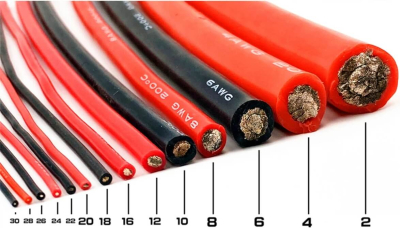
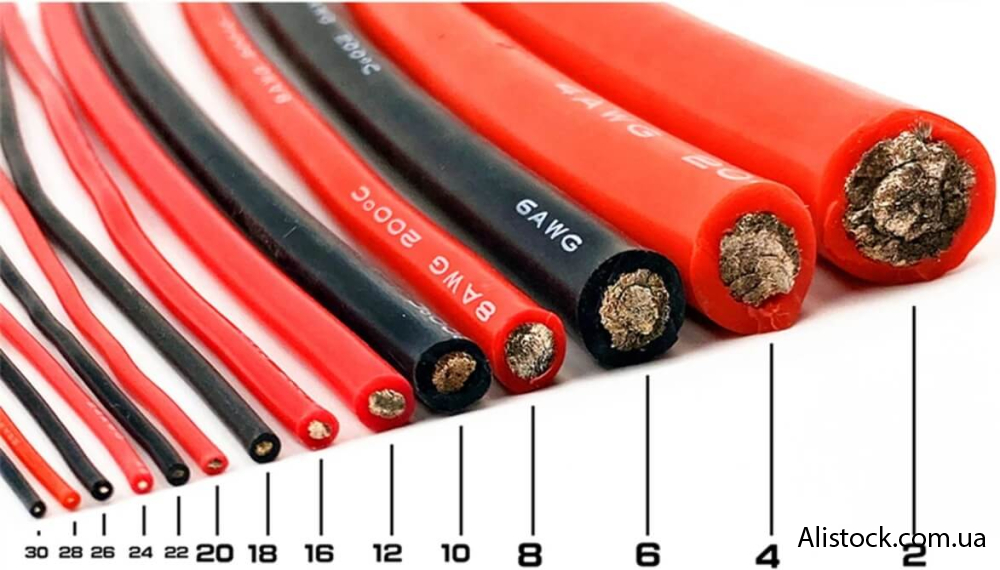
AWG (American Wire Gauge) is an American system for designating wire thickness.
Important:
The SMALLER the AWG number — the THICKER the cable
AWG ≠ mm², but there is an exact match between them
Current for 12 V — why is it critical?
In 12 V systems, currents are very large.
Formula: P = U × I
For example:
600 W ÷ 12 V = 50 A
1000 W ÷ 12 V = 83 A
❗ Therefore, the cable is always taken with a margin, otherwise:
- heating
- voltage drop
- power loss
- fire hazard
Is AWG 6 enough for 50 A?
✅ YES, if:
- copper cable
- length up to 1–1.5 m
- normal ventilation
AWG 6 parameters:
- cross-section: 16 mm²
- safe current: 55–75 A
- withstands more for a short time
❌ NOT recommended if:
- length over 2 m
- inverter >800 W
- surge current >60–70 A
In these cases, AWG 4 (25 mm²) is better
Voltage drop (very important)
For 12 V, allowable drop:
≤3% — ideal
≤5% — acceptable
Example (50 A, 2 m round trip):
AWG 6 → drop ≈ 0.35–0.4 V
AWG 4 → ≈ 0.2–0.25 V
Less drop =
✔ stable inverter operation
✔ less heating
✔ longer battery life
Cable type — no less important
I recommend:
OFC copper (100%)
multi-core, flexible
marking: Battery cable, Welding cable
❌ Do not take:
CCA (aluminum + copper coating)
rigid single-core
Fuse (required!)
Between the battery and the load:
for 50 A → 60–70 A
type: ANL / MIDI
put a maximum of 20–30 cm from the battery
Brief summary
50 A, up to 1.5 m → AWG 6 (16 mm²)
50 A, 2–3 m → AWG 4 (25 mm²)
inverter ≥800 W → immediately AWG 4
: